
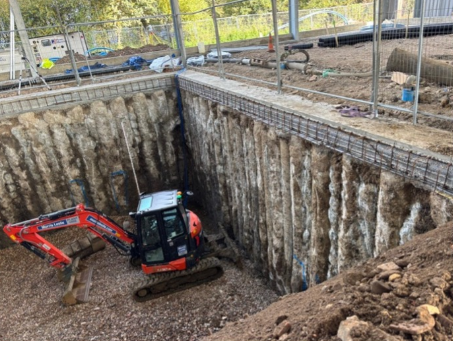
Which is the better apple? A Cox’s Orange Pippin or a Bramley? And what does any of that have to do with piling?
The answer to the first question depends on whether you want an apple you can bite into without wincing or you want to bake a pie. And so it is with piling. The most suitable method always depends on circumstances and what you’re trying to achieve.
You could say that Suttle Piling is agnostic when it comes to the method. The piling technique should always be made to fit the project and never the other way round. We don’t specialise in a particular method, we specialise in finding the right method.
Select and Refine
At the start of a project we undertake a thorough review of geotechnical data, the site dimensions, access, the surrounding environment and the overall project goals. Often this leads to us suggesting an alternative to the piling proposal in the project plan.
Even if the technical review doesn’t fundamentally alter the method, it almost always leads to refinements such as optimising the pile layouts and lengths to maximise efficiency and improve buildability. These may seem like minor details, but they can cause major headaches if they’re not addressed until the project is fully underway.
Investment, Options and Availability
It’s harder to offer something when it’s not readily available. It’s easy to see how projects may be skewed to fit a particular piling method when there’s a limited range of options.
Suttle Piling has a substantial long-running investment programme that means we have a modern, mixed fleet of rigs and support plant. We can choose from rotary bored, CFA, SFA, driven, sheet piles, or kingpost retaining walls depending on the needs of the project.
There’s no pet method. Instead we have the flexibility to choose the most suitable method and adapt if conditions or client priorities change.
For example:
- For railway embankment stabilisation works we might select sheet piles because they’re quick to install within a narrow possession window and the method generally needs a small working footprint.
- For the station improvements at Okehampton a mix of CFA and SFA piles were installed as the location and need for nighttime working made it important to minimise noise and vibration.
- In coastal locations we frequently combine sheet piles with concrete works to provide maximum protection against the pounding structures receive from the sea.
To discuss the most suitable piling method for your project contact Suttle Piling.