
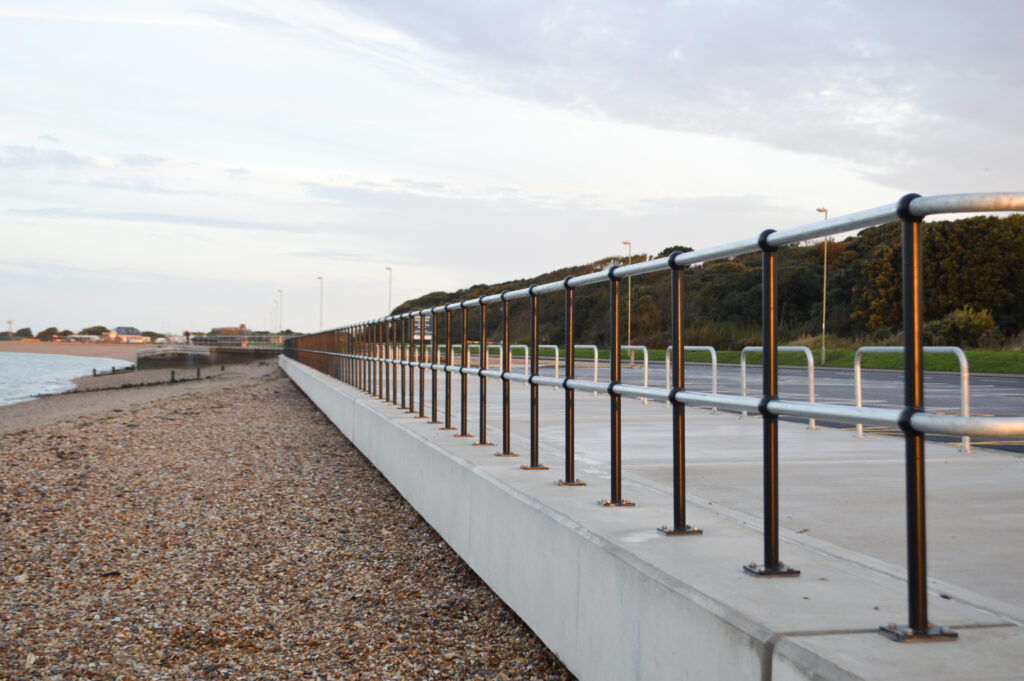
Coastal infrastructure rarely gets much attention until something goes wrong. At Stokes Bay, years of wave attack and storm damage had taken their toll on a 1970s seawall that protected the promenade, car park and neighbouring road. Repeated failures made the area unsafe, and large sections of the public space, including the well-used Alverbank East car park, had to be closed.
By 2024, it was decided that a full replacement of a 135m stretch of the seawall was the only long-term solution. The new seawall needed to be stronger, more resilient and able to withstand the pressures of a constantly changing coastline.
Understanding the Challenge
Working on coastal structures is very different from working inland. Conditions change by the hour. Tides dictate working windows. Saltwater and wave action introduce additional design pressures. Plant access is often limited, and safety considerations multiply when the site is close to public areas running directly alongside the work area.
At Stokes Bay, these factors were all present. The existing structure had not only deteriorated but also presented a structural risk to the promenade above. Any reconstruction effort had to be managed with precision to ensure safety, protect the coastline and minimise disruption to residents and visitors.
Why Sheet Piling Made Sense Here
For this environment, a sheet-pile wall is an efficient and reliable solution. Steel sheet piles provide the flexibility, durability and installation speed needed on a coastline where conditions can change rapidly. They also offer a long service life when designed with the right corrosion protection and detailing, essential in this environment.
Replacing the seawall with a modern sheet-pile system gave the structure significantly improved resilience against erosion, wave energy and high-tide loading, while also allowing the team to work within the physical limits of the site.
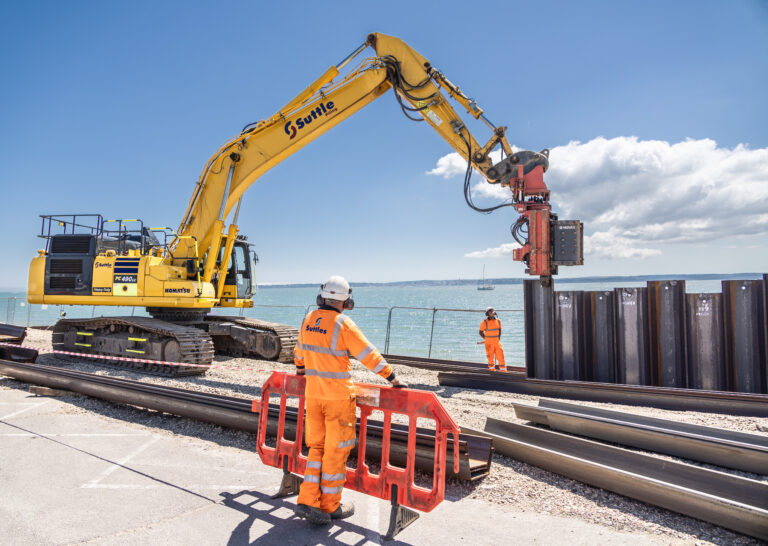
Working Within a Marine Environment
One of the defining aspects of this project was the constant need to work with, not against, the coastal environment. Tight access, pedestrian interfaces, and proximity to the promenade required careful sequencing, safe plant movement and well-planned public-area management.
As with any shoreline project, tidal conditions shaped the daily workflow. Equipment had to be positioned safely, and installation windows planned around the tidal cycle. With thoughtful preparation and experienced crews, the work progressed efficiently despite the constraints.
Restoring Access for the Community
Once the new seawall and capping beam were in place, additional improvements followed: resurfacing the promenade, reinstating handrails, upgrading drainage and opening the long-closed car park. For local residents, this work didn’t just replace a structure, it restored access to a valued public amenity.
The result is a more secure, more durable coastal defence that will protect the frontage for many years to come, reducing the need for reactive maintenance and helping the council manage the coastline more effectively.
A Reliable Approach to Coastal Infrastructure
Projects like this highlight the importance of combining technical understanding with practical, hands-on coastal construction experience. Marine piling requires detailed planning, but also the flexibility to adapt to challenges as they emerge; something that can only be achieved with an experienced team, modern plant and a clear focus on safety and environmental responsibility.
The completed seawall at Stokes Bay now stands as a strengthened line of defence, supporting the promenade, protecting nearby infrastructure and providing a safer, more resilient coastline for the community.
Read the full case study here