
Piling technology isn’t exactly seen as an afterthought, but there’s no doubt that its capacity to influence project outcomes is often under-appreciated. Putting piling and foundation works out to tender after designs have been finalised remains common practice – and a missed opportunity.
For small, simple projects this might not matter all that much – although even here an unexpected underground obstruction can cause major disruption to the design, schedule and cost in relative terms.
But we’ve seen over multiple projects how early engagement of a geotechnical specialist can simplify delivery, produce substantial cost savings and pre-empt severe project risks that would otherwise create time and cost overruns.
A cursory analysis of the site and proposed loads might lead to the conclusion that piled foundations will be needed. But what type of piling and exact configuration will provide the best overall solution? That’s a hugely significant question that is best answered at an early stage.
Piling Options
Piles can be driven, augered (sectional or continuous flight) or bored, depending on the site, soil conditions and project requirements. There’s also a variety of sheet piling methods available. Deciding on the most appropriate method calls for specialist knowledge and a more detailed analysis of what lies below the surface of the site.
The ideal depth, diameter and spacing of individual piles can vary enormously from one project to the next, with implications for logistics, sequencing and cost.
It’s not unusual for an initial review by our internal design team to reveal that proposed foundation designs aren’t feasible or economically efficient, based on the site location or sub-soil conditions.
How do you run an effective tendering process for a design that won’t work in practice? What impact will it have on the project when reality dawns – and sequencing suddenly becomes unworkable and projected costs go out of the window? Far better to draw on our ECI capabilities and make key decisions before designs progress too far.
Saving Time and Cost
Design reviews sometimes identify unnecessary process steps and costs. On a proposed quayside improvement project the specification required surface coatings to be applied to the anchor piles, and the rear and front faces of the new quayside retaining wall sheet piling. Our in-house technical team identified that the surface coatings were not needed as a stone façade was to be built for the front face once the piles were installed – saving £30,000 for the customer.
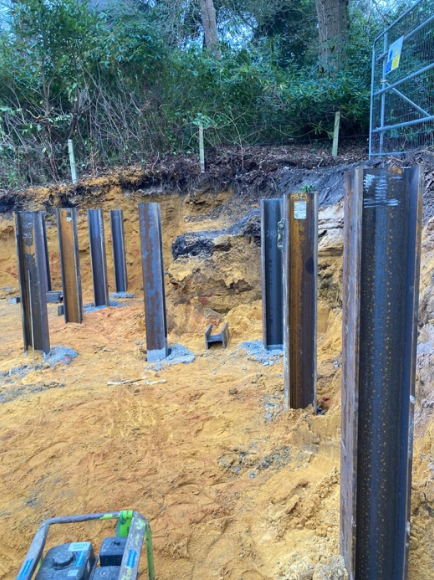
Occasionally changes to the plan have to be made while the project is in progress. On the Lindsey Road project a kingpost retaining wall was needed to facilitate construction of a new residential development.
During construction, it became apparent that the original King Pile layout had to be modified due to emerging site conditions. Our in-house design and technical team responded immediately and prioritised the use of the materials already on site. This avoided further deliveries, reduced waste and averted any potential impacts to the construction programme.
Success Designed-In
So perhaps it’s time to look at piling and geotechnical engineering differently? Not so much a technical hurdle that has to be cleared before construction proper gets underway, but more an opportunity to simplify, derisk and improve the overall outcomes of the project.
To find out more, contact Suttle Piling.